


A discussion on the opportunities and challenges within the innovation ecosystem was held with the participation of experts from Azerbaijan and China
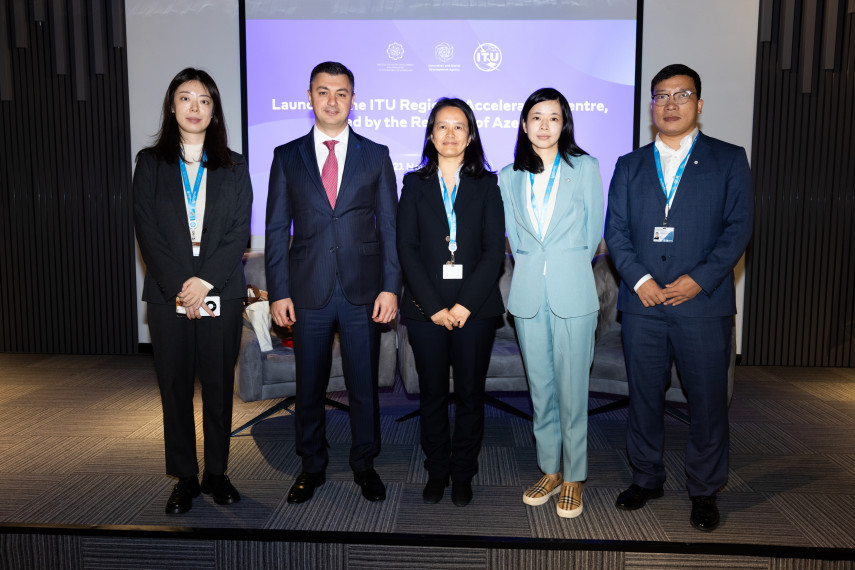
As part of the opening ceremony of the International Telecommunication Union’s (ITU) Regional Acceleration Center, a panel discussion titled “Opportunities and Challenges in the Innovation Ecosystem” was held.
The panel featured speeches by Ke Wang, representative of ITU’s Global Acceleration Center in China; Ku Zhang, representative of the Regional Acceleration Center; and Elvin Hajiyev, representative of ITU’s Regional Acceleration Center in Azerbaijan.
In his remarks, Elvin Hajiyev highlighted the significant contribution of the Azerbaijan Innovation Center to the development of the local innovation ecosystem:
“Although the Center has been operating for only one year, it has already succeeded in uniting the innovation ecosystem under one umbrella. Over 200 programs have been implemented here. By joining the ITU Acceleration Center network, we will further expand these activities and strengthen our position at both the regional and global levels.”
He also noted that, in addition to Baku, innovation centers have been established in other regions of the country. Last year, the Sumgait Innovation Hub was launched, and this year, the Nakhchivan Innovation Center was inaugurated. These centers offer comprehensive conditions for innovators, equipped with scientific and prototyping laboratories and providing training sessions and workshops under the mentorship of leading experts.
The experts representing China discussed the features of their country’s innovation ecosystem shaped by its specific economic model. Ke Wang, representative of ITU’s Global Acceleration Center in China, emphasized the role of acceleration centers in reducing the “digital divide” and fostering an inclusive ecosystem.
Ku Zhang, representative of ITU’s Regional Acceleration Center in China, noted that the Center focuses on digital transformation, innovation, and entrepreneurship initiatives across BRICS countries. He stressed that alongside the vast opportunities created by artificial intelligence and robotics for industry and society, challenges such as developing an adequate talent pool and ensuring access to financing are becoming increasingly pressing.


